
Currently Empty: ₨ 0

0 Comments
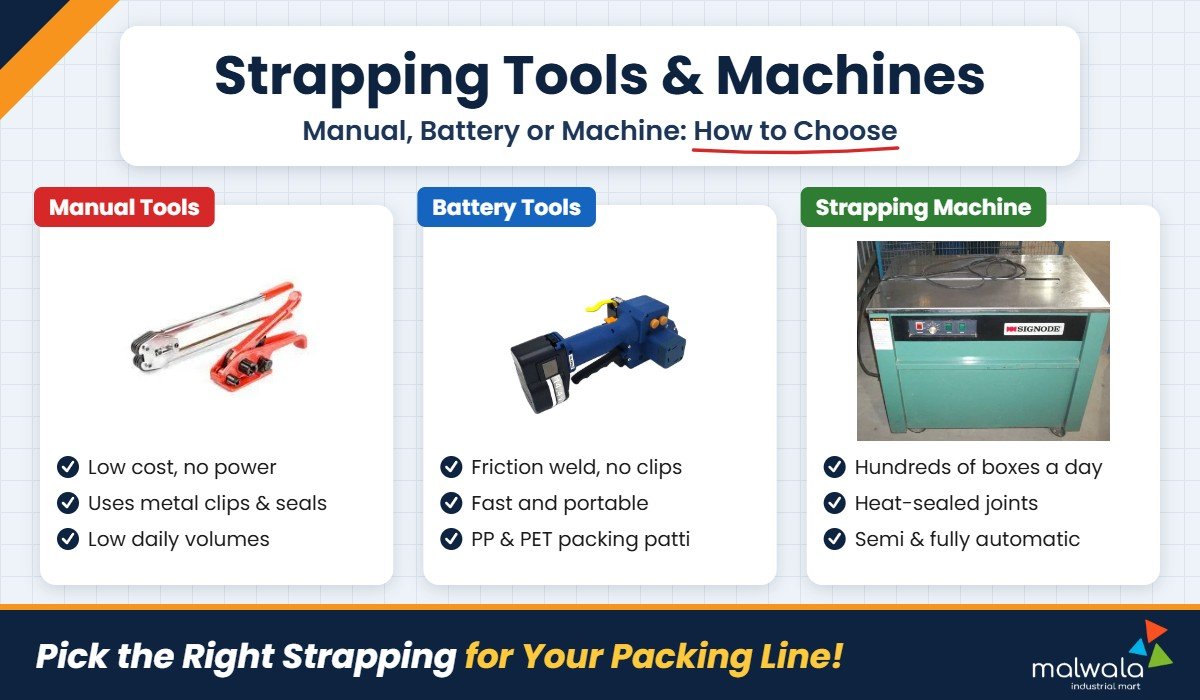
Strapping holds cartons, bundles and pallet loads together so they stay secure in storage and transport. You can strap by hand with a manual strapping tool, with a cordless battery strapping tool, or with a strapping machine on a packing line. The right choice depends mainly on how many packages you strap each day, how heavy the load is, and which strap (packing patti) you use. This guide explains each option and how to choose between them.
Malwala Industrial Mart supplies strapping tools and packing patti to factories and warehouses across Pakistan, so the advice below comes from the questions buyers ask us most often.
What is Strapping Used For?
Strapping is a band of plastic or steel pulled tight around a load and sealed, so the load cannot shift or open. It is used to:
- Close and reinforce cartons for dispatch, especially heavy or export cartons.
- Unitise pallet loads, so boxes or bags stay on the pallet during handling and transport.
- Bundle long items such as pipes, rods, timber, profiles and sheets.
- Secure goods to pallets or skids, including machinery, drums and coils.
In Pakistan, plastic strap is widely called packing patti, and the tools used to apply it are often called packing patti machines.
The Three Ways to Strap
Manual strapping tools
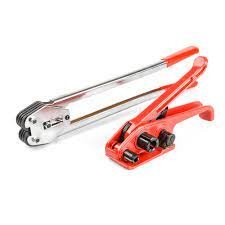
A manual strapping tool uses hand power to pull the strap tight, then joins the two ends with a metal clip (also called a seal). The usual set-up is a tensioner that grips and tightens the strap, and a sealer that crimps the clip around the overlapping ends. Some tools combine both jobs in one.
Manual tools need no power or batteries, cost the least and are easy to maintain. They are slower than other methods and more tiring for high volumes, so they suit workshops and stores that strap a modest number of cartons or bundles each day. Our manual strapping tool for packing patti is used with packing patti clips matched to the strap width.
Battery Strapping Tools
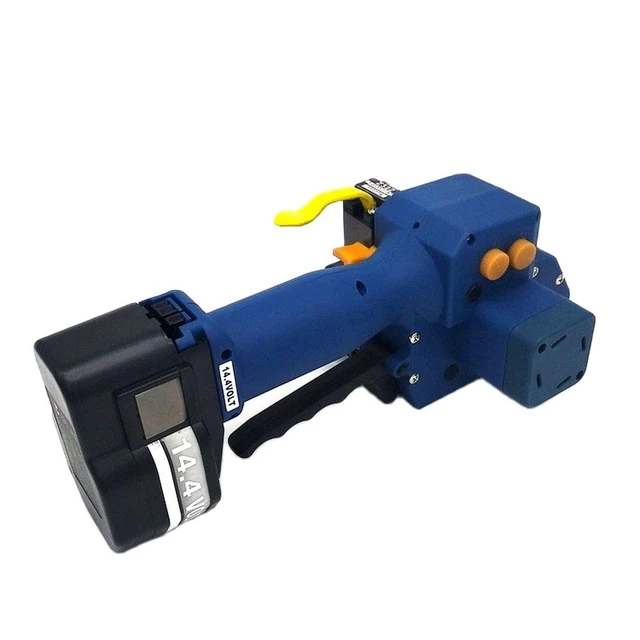
A battery strapping tool is a handheld, cordless tool that tensions the strap and then joins the ends by friction welding: it vibrates the two layers of strap against each other until they melt together, so no metal clips are needed. Tension is set on the tool, so every strap is pulled to the same tightness.
Battery tools are much faster than manual tools, give consistent results and reduce operator fatigue. Because they are cordless, they can be carried to the load, which makes them ideal for pallets, large bundles and work away from the packing table. Our battery strapping tool is designed for PP and PET strap; check the strap width and thickness range of the tool before you buy a strap for it.
Strapping Machines
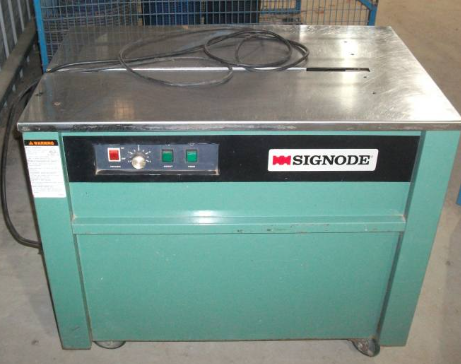
A strapping machine is a fixed machine that straps cartons on a packing line or table. With a semi-automatic machine, the operator feeds the strap around the carton and the machine tension, seals and cuts it, usually by heat-sealing the strap. Fully automatic machines with an arch strap the carton without the operator feeding the strap, and are used on high-volume lines.
Strapping machines give the highest output and the most consistent strapping, but they cost more, need power and stay in one place. They suit factories that pack a large number of similar-sized cartons every day. We supply the Signode strapping machine; Signode is one of the best-known names in strapping equipment.
Manual, Battery or Machine: Comparison
| Manual Strapping Tool | Battery Strapping Tool | Strapping Machine | |
| How the joint is made | Metal clip (seal) crimped by hand | Friction weld, no clip | Usually heat seal |
| Speed | Slowest | Fast | Fastest |
| Power needed | None | Rechargeable battery | Mains power |
| Portability | Portable | Portable, cordless | Fixed in one place |
| Consistent tension | Depends on the operator | Set on the tool | Set on the machine |
| Best for | Low daily volumes, occasional strapping | Pallets, bundles, medium to high volumes | High volumes of cartons on a packing line |
| Running cost per strap | Strap plus clip | Strap only | Strap only |
Strap Material: PP or PET Packing Patti?
The strap matters as much as the tool. The two common plastic straps are:
- PP (polypropylene) strap: lighter, more flexible and lower in cost. It stretches more under load and loses some tension over time, so it suits cartons and light to medium loads.
- PET (polyester) strap: stronger and stiffer, with much less stretch, so it holds its tension well. It is used for heavy pallets, bricks, timber, metal products and loads that settle in transport, and is often used instead of steel strap.
Whichever you choose, the strap width and thickness must match your tool and clips. Our packing patti rolls are available in different widths; ask us which width suits your tool and load.
Plastic or Steel Strapping?
Steel strapping was once the standard for heavy loads, and it is still used for very heavy, sharp-edged or hot products such as steel coils. For most other loads, plastic strap has replaced it:
- Plastic (PP or PET) strap is lighter, cheaper to transport, does not rust or stain the product, and is safer to cut because it does not have sharp edges.
- PET strap holds tension well and absorbs shocks without breaking, so it can replace steel on many heavy loads such as bricks, timber and metal bundles.
- Steel strap has the highest strength and does not stretch, but it rusts, can damage the product’s surface and has sharp ends when cut.
Joining Methods: Clips, Friction Weld And Heat Seal
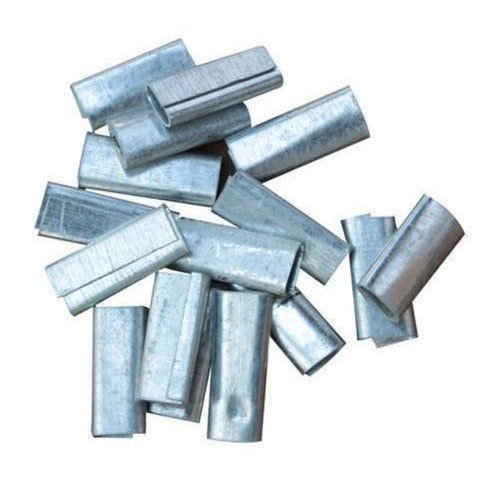
- Metal clips (seals): crimped around the overlapping strap with a manual sealer. Simple and reliable, but each strap uses a clip, and the clip must match the strap width.
- Friction weld: used by battery tools. The strap layers are vibrated until they fuse. There is no consumable other than the strap, and the joint is strong when the tool is set correctly.
- Heat seal: used by most strapping machines. A heated element melts the strap ends, which are then pressed together.
How to Choose a Strapping System
Ask these five questions:
- How many straps do you apply per day? A few dozen can be done by hand; hundreds justify a battery tool; a steady flow of cartons on a line justifies a machine.
- How heavy and how stable is the load? Heavy, rigid or settling loads need PET strap and good, consistent tension.
- Which strap will you use? Confirm the strap material, width and thickness your tool accepts.
- Where is the strapping done? Strapping at the pallet or in the yard favours a cordless battery tool; strapping at a fixed packing point can use a machine.
- What is your budget, including running costs? Manual tools cost least to buy, but clips add a cost to every strap.
Many factories use more than one method: a strapping machine for cartons on the line and a battery tool for pallets.
Frequently Asked Questions
What is Packing Patti?
Packing patti is the common name in Pakistan for plastic strapping, usually PP or PET strap supplied in rolls. It is used with manual tools, battery tools and strapping machines.
Do Battery Strapping Tools Need Clips?
No. A battery strapping tool joins the strap by friction welding, so it does not use metal clips. Manual tools need clips.
Which Strap Works With a Battery Strapping Tool?
Most battery strapping tools work with PP and PET strap within a specified width and thickness range. Check the range for your tool before ordering a strap.
How Many Straps Does a Pallet Need?
It depends on the weight, height and stability of the load. Light, stable loads may need only two straps, while heavy or tall loads need more straps in both directions. If you are unsure, tell us the load and we’ll suggest a strapping pattern.
Manual or Battery Tool: Which is Better For a Small Factory?
If you strap occasionally, a manual tool with clips is the most economical choice. If you strap pallets or bundles every day, a battery tool saves time and gives more consistent tension.
Need a Complete Strapping Set-up?
Send us your strap width, the loads you strap and how many you do per day, and we’ll quote the tool, packing patti and clips together. Request a quote or WhatsApp us on +92 317 4727853.