
Currently Empty: ₨ 0

0 Comments
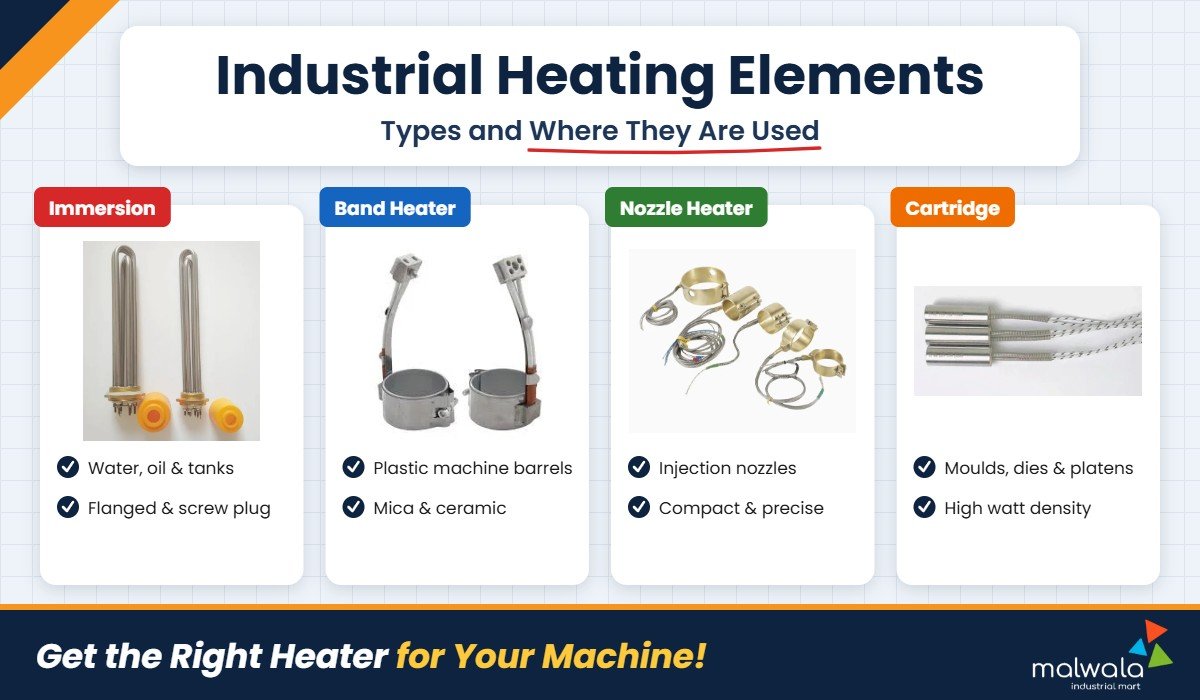
An industrial heating element turns electricity into heat by passing current through a resistance wire inside a protective sheath. The main types are immersion heaters, mica band heaters, nozzle heaters, cartridge heaters, U-shape and coil heaters, and heating blowers. Which one you need depends on what you are heating: a liquid in a tank, a metal mould or die, the barrel of a plastics machine, or air. This guide explains each type and where it is used.
Malwala Industrial Mart supplies industrial heating elements across Pakistan, and helps maintenance teams match replacements to the heater they already have.
How An Electric Heating Element Works
Most industrial heaters have three parts:
- A resistance wire, usually a nickel-chromium alloy, which heats up when current flows through it.
- Electrical insulation that keeps the wire away from the outer surface while letting heat pass. In tubular and cartridge heaters this is compacted magnesium oxide (MgO) powder; in band heaters it is mica.
- A sheath that protects the wire and transfers heat to the job. Common sheath materials are stainless steel, copper and nickel alloys such as Incoloy, chosen for the temperature and the fluid or atmosphere.
An important term is watt density: the power of the heater divided by its heated surface area. A heater with too high a watt density for the job runs too hot, which can damage the heater or the material being heated. Water tolerates a higher watt density than oil, for example, which is why heaters for oil are usually larger for the same power.
The Main Types of Industrial Heating Elements
Immersion Heaters
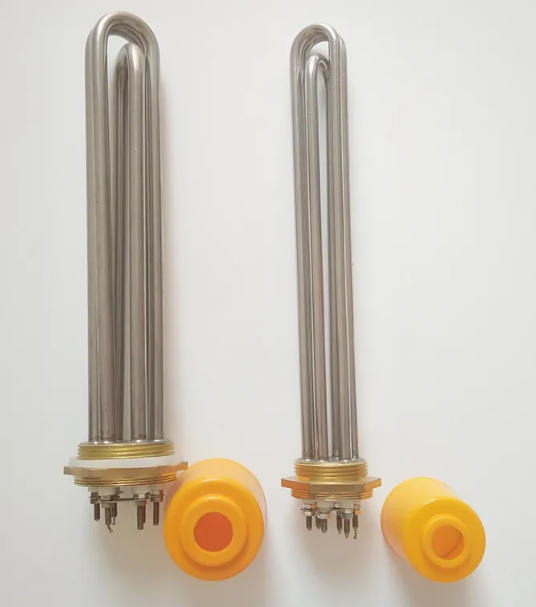
Immersion heaters sit directly in the liquid and heat it from inside the tank. They are used for water, oil, process liquids and cleaning baths. Smaller heaters screw into a threaded boss in the tank wall; larger ones are mounted on a flange that bolts to the tank. We supply both immersion heaters and flanged immersion heaters. Choose the sheath material for the liquid, and keep the heated length fully covered by liquid at all times.
Mica Band Heaters
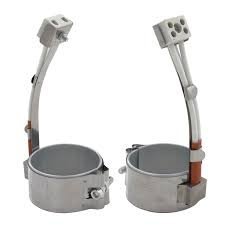
A mica band heater is a flat resistance element insulated with mica and enclosed in a metal band that clamps around a cylinder. Band heaters are used on the barrels of injection moulding machines and extruders, and on pipes and containers that need surface heating. A tight, clean fit on the barrel is essential: an air gap makes the heater run hotter and shortens its life.
Nozzle Heaters

A nozzle heater is a small band heater made to fit the nozzle of an injection moulding machine, where the space is tight and the temperature must be held closely so plastic does not freeze or degrade in the nozzle.
Cartridge Heaters
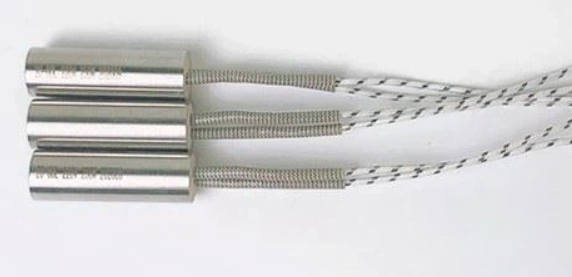
A cartridge heater is a cylindrical heater inserted into a hole drilled in a metal part. Cartridge heaters deliver a lot of heat in a small space and are used in moulds, dies, hot plates, sealing jaws, platens and packaging machines. They are specified by diameter, length, voltage and wattage. The hole should be a close fit: a loose fit traps air, which insulates the heater and makes it overheat.
U-shape and Coil Heaters
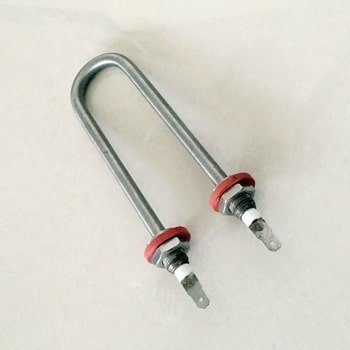
Tubular heaters bent into a U shape or other forms are used in ovens, dryers, air ducts and water heating. A U-shape heating coil or spring coil heater is chosen by its shape and dimensions, voltage and wattage, so when you replace one, measure the old element or send us a photo.
Solar Water Heater Elements
Many solar water heaters have an electric element as back-up, which heats the water when there is not enough sun. Our solar water heater electric heating coil is used for this purpose.
Heating Blowers
A heating blower combines a heater and a fan to deliver warm air for process heating, drying and space heating. We supply the Chromalox heating blower; Chromalox is a well-established maker of industrial heating equipment.
Where Industrial Heaters Are Used
Heating elements are found in almost every factory. Plastics plants use band, nozzle and cartridge heaters on injection moulding machines and extruders. Packaging and printing machines use cartridge heaters in sealing jaws and rollers. Food, textile and chemical plants use immersion heaters in tanks and baths, and U-shape and coil heaters in ovens and dryers. Workshops, warehouses and offices use heating blowers for warm air. In each case, the right heater type, size and sheath material decide how long the heater lasts.
Choosing The Right Sheath Material
| Sheath material | Typical use |
| Copper | Clean water heating |
| Stainless steel | Water with some chemicals, oils, food applications, air heating |
| Incoloy (nickel alloy) | High temperatures and corrosive conditions, air and oven heating |
| Mild steel | Oil heating in many tank applications |
If the liquid is a chemical or the water is aggressive, tell us what you are heating so the sheath material can be matched to it.
Quick Selection Guide
| What you are heating | Heater type | Typical applications |
| Water, oil or process liquid in a tank | Immersion heater (screw-in or flanged) | Tanks, boilers, cleaning baths, oil heating |
| Barrel of a plastics machine | Mica band heater | Injection moulding machines, extruders |
| Injection moulding nozzle | Nozzle heater | Injection moulding machines |
| A hole in a metal part | Cartridge heater | Moulds, dies, sealing jaws, hot plates |
| Air in an oven, dryer or duct | U-shape or coil heater | Ovens, dryers, air heaters |
| Water in a solar water heater | Solar water heater element | Electric back-up for solar heaters |
| Air for a room or process | Heating blower | Space heating, drying, process air |
Heater, Sensor and Controller Work Together
A heater on its own just gets hotter. To hold a set temperature, it works in a loop with a temperature sensor and a controller:
- A sensor measures the temperature. A PT100 temperature sensor is accurate and stable for most process temperatures; thermocouples cover higher temperatures.
- A temperature controller, such as the Fotek MT48-L, compares the reading with the set point.
- The controller switches the heater on and off (or varies its power) to hold the temperature.
When a heater keeps failing, check the sensor and controller as well: a faulty sensor or poorly tuned controller can drive a heater too hot.
Why Heating Elements Fail
Most heater failures have a cause that can be found and fixed, so a replacement lasts longer:
- Overheating from poor contact. A band heater that is loose on the barrel, or a cartridge heater in an oversized hole, cannot pass its heat on and burns out. Fit heaters tightly and clean the contact surface.
- Running dry. An immersion heater that is not fully covered by liquid overheats quickly. Fit a level switch or low-level cut-out on tanks where the level can drop.
- Scale and sludge. Hard water and dirty oil build a layer on the sheath that traps heat. Clean or descale heaters regularly.
- Moisture in the insulation. Tubular and cartridge heaters can absorb moisture when stored or idle, which may trip a breaker at start-up. Store heaters in a dry place.
- Loose or corroded terminals. These overheat and can burn through the leads. Check and tighten connections during maintenance.
- Wrong voltage or a faulty controller. Running a heater above its rated voltage, or a sensor or controller fault that keeps it switched on, overloads the element.
How to Specify a Replacement Heating Element
To get the right replacement first time, collect these details:
- Type and dimensions: for example the inside diameter and width of a band heater, or the diameter and length of a cartridge heater.
- Voltage and wattage: usually printed on the heater or its label.
- Terminal type and lead length: screw terminals, leads or a plug.
- Mounting: thread size or flange size for immersion heaters; clamp type for band heaters.
- Sheath material, especially for immersion heaters in chemicals or oil.
A clear photo of the old element and its label is often the quickest way to identify it. Custom sizes can be quoted on request, subject to availability.
Frequently Asked Questions
What is The Difference Between a Band Heater and a Nozzle Heater?
Both clamp around a cylinder. A band heater fits the larger barrel of an injection moulding machine or extruder; a nozzle heater is a smaller heater made for the machine’s nozzle.
Where Are Cartridge Heaters Used?
Cartridge heaters are inserted into drilled holes in metal parts, such as moulds, dies, sealing jaws, hot plates and packaging machines, where a lot of heat is needed in a small space.
Can I Use an Immersion Heater in Oil?
Yes, if the heater is made for oil. Oil needs a lower watt density than water, so an immersion heater designed for water should not be used in oil.
What Information do I Need to Order a Replacement Heating Element?
The heater type, dimensions, voltage and wattage, terminal type and mounting. A photo of the old element and its label helps us match it.
Why Does a New Heater Trip The Breaker When It Is First Switched On?
Heaters that have been in storage can absorb moisture into their insulation. Have an electrician check the insulation resistance before installation and follow the manufacturer’s advice on drying the heater.
Can Heating Elements be Made to a Custom Size?
Custom sizes can be quoted on request, subject to availability. Send us the dimensions, voltage and wattage you need.
Need a Heater Matched?
Send us the size, voltage and wattage, or a photo of the old element, and we’ll match the replacement. Request a quote or WhatsApp us on +92 317 4727853.